Table of Contents
ToggleYour entryway table is the first thing visitors see when they walk through the door, it sets the tone for your entire home. Whether you’re working with a narrow console or a generous farmhouse table, decorating it thoughtfully transforms that space from a mail-dumping zone into a welcoming statement. The trick is balancing beauty with function: it needs to look intentional and polished, but still serve as a practical landing spot for keys, bags, and daily necessities. The right approach depends on your space, personal style, and how you actually use that surface. Here are seven proven strategies to make your entryway table work harder and look better in 2026.
Key Takeaways
- Choose a bold focal point—such as a large mirror, sculptural vase, or statement piece—to anchor your entryway table decorating and prevent it from looking like a random pile of accessories.
- Mix contrasting textures and materials like wood, ceramic, metal, and fabric in clusters of odd numbers to create visual depth and a curated, intentional appearance.
- Add a small table lamp and one or two low-maintenance plants to bring both ambient light and freshness to your entryway without overwhelming the space.
- Incorporate functional storage solutions like woven baskets, decorative boxes, or wall-mounted shelving beneath or above the table to keep the surface usable for daily essentials.
- Display personal collections and meaningful items—books, vintage objects, or travel souvenirs—edited down to your favorites to make the entryway feel warm and lived-in.
- Rotate accessories every four to six weeks or seasonally to keep your entryway table design feeling fresh, intentional, and visually engaging throughout the year.
Choose a Focal Point Statement Piece
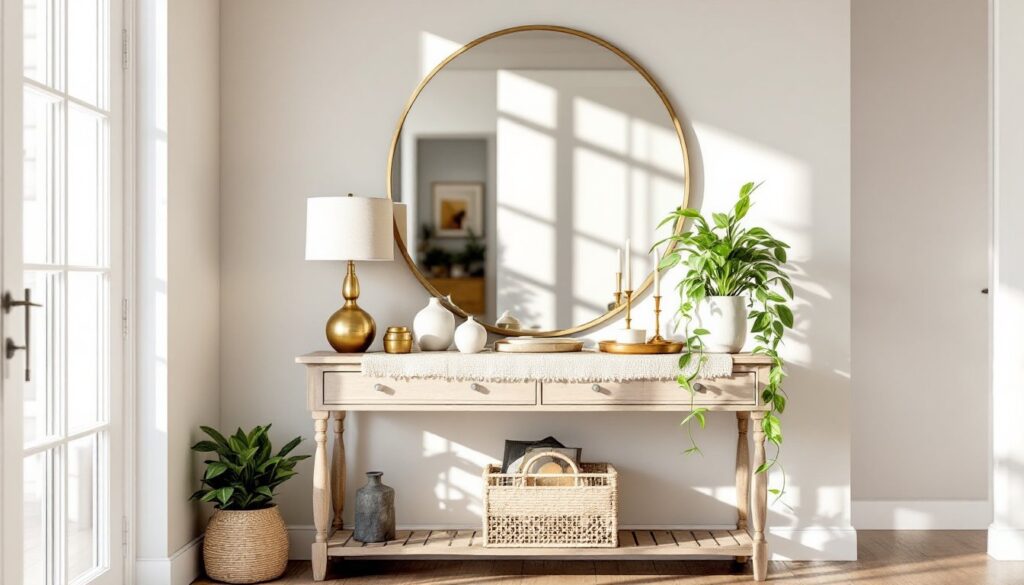
Start with one strong anchor item, a mirror, a sculptural object, or a bold piece of pottery. This prevents the table from looking like a pile of random accessories and gives your eye something to land on. A large statement mirror does double duty: it reflects light and makes the entryway feel bigger while looking intentional. Alternatively, a sculptural bowl, tall vase, or oversized plant in an interesting container works just as well.
Your focal point should claim about one-third of the table’s surface area. Keep it toward the center or slightly back, leaving room around it for smaller supporting pieces. If you choose a mirror, make sure it’s securely mounted or heavy enough not to tip if bumped. For a vase or bowl, ensure it’s proportional to your table, an oversized piece on a small console looks awkward, while a delicate object gets lost on a large surface.
Color and finish matter here. A dark, textured mirror frames lighter accessories: a white ceramic piece reads modern and clean. Pick something that either matches your home‘s existing palette or deliberately contrasts for visual interest. This single piece becomes the anchor that makes the whole display feel planned rather than accidental.
Layer Textures and Materials for Visual Interest
A table styled with only one material, say, all glass or all metal, feels cold and flat. Instead, mix wood, ceramic, metal, stone, and fabric to create depth and tactile appeal. Place a woven mat or runner down the center of the table, then layer accessories on top. This grounds the display and adds warmth while protecting your table surface.
Combine matte and glossy finishes. Pair a matte ceramic vessel with a shiny brass candlestick, or place a rough stone sculpture next to a polished wooden tray. These contrasts catch light differently and make the overall display feel more curated. When home decorating ideas on a budget matter, you don’t need expensive pieces, thrift stores and discount retailers have interesting textures in ceramics, wood, and metal at any price point.
Group items by material in small clusters rather than spreading everything out evenly. Three ceramic pieces clustered together feel intentional: the same pieces scattered across the table look chaotic. Odd numbers (three or five items per cluster) naturally feel more balanced than even groupings, a principle designers use because our eyes read asymmetry as more interesting than symmetry.
Add Functional Lighting and Greenery
A small table lamp or pair of lamps transforms an entryway table into a layered lighting situation that feels sophisticated and practical. Entryways often lack ambient light, and a lamp on the table solves that while looking intentional. Choose a lamp with a shade in a neutral tone or a material that echoes other textures on the table, linen, rattan, or metal. The base can be brass, ceramic, wood, or concrete: just make sure it’s stable and won’t tip easily.
Greenery softens hard surfaces and brings life into the space. A trailing pothos or philodendron in a simple pot adds movement and freshness without taking up much table real estate. If you’re short on table space, a tall, narrow plant (like a sansevieria or dracaena) placed behind the table does the job. Don’t overcrowd with plants, one or two pieces is plenty. Modern interior design trends lean toward single dramatic plants rather than plant clusters on entry tables.
Live plants require minimal care if chosen wisely. Choose low-light tolerant varieties if your entryway doesn’t get direct sun. Water according to the plant’s needs, most trailing plants prefer to dry out slightly between waterings. If real plants aren’t feasible, a high-quality faux option beats a wilted real one: just make sure it looks convincing rather than plasticky.
Balance Decor with Practical Storage Solutions
An entryway table that looks good but forces you to move five things to grab your keys defeats the purpose. Build in storage that’s both functional and attractive. A woven basket or open shelf unit beneath the table holds bags, shoes, and outerwear while staying invisible. A small drawer insert on top corrals keys and small items: a decorative tray groups candles, a phone charger, or guest items.
Think vertical to maximize space. Wall-mounted shelving or a pegboard above the table doubles your storage footprint without eating more surface area. A narrow console table with a shelf underneath offers storage without being bulky. If you prefer everything on the table itself, a decorative box with a lid hides clutter while contributing to the overall design. Keep one small area, even just six inches, completely clear for daily use. This prevents the table from looking staged and unusable.
When considering entryway design holistically, storage should blend seamlessly into your decor. Paint baskets to match your palette, choose drawer inserts in wood or metal that echo your table’s finish, and select boxes in colors that support your overall scheme. The goal is a table that looks deliberately styled but still functions as the hub of your entryway’s daily traffic.
Incorporate Personal Style and Collections
Your entryway table is prime real estate for displaying items that tell your story. If you collect vintage books, small sculptures, or souvenirs from travels, this is the place to show them. A curated collection feels intentional and personal, it’s what separates a styled room from a catalog page. The key is editing ruthlessly: five pieces you love beat twenty pieces crammed onto the table.
Arrange collections by height, color, or theme. Display books spine-out or stacked horizontally with a small bookend. Group vintage objects by color (all blues, all neutrals) or material (all ceramic, all metal) rather than mixing randomly. A single framed photo or two works better than a gallery wall on a small table: choose frames that coordinate in finish and style. Personal items make an entryway feel lived-in and warm, which is exactly what a guest should feel upon entry.
If your collection is large, rotate pieces seasonally or monthly. This keeps your entryway fresh and lets you enjoy more of what you own without overwhelming the space. A shadow box or floating shelf above the table can display smaller treasures while keeping the table surface cleaner. This approach works especially well for collections of small objects that might otherwise clutter a surface.
Seasonal and Rotating Displays
Change your entryway table seasonally to keep it feeling fresh and connected to the time of year. In spring, add fresh flowers or pastel-colored items: summer calls for bright botanicals or light, airy pieces: fall invites warm metallics, dried branches, and deeper tones: winter brings evergreens, candles, and cooler silvery accents. This practice costs nothing if you source items from your yard, local walks, or items you already own.
Rotate accessories every four to six weeks even if you don’t change them seasonally. Swap a lamp for a different one, replace candlesticks with a sculpture, or switch out books and decorative objects. This keeps your eye engaged and the table feeling intentional rather than static. When you live with an arrangement daily, you stop noticing it, rotation resets that attention.
For seasonal displays, consider themes that feel natural to your home and location. Research modern home decor ideas for seasonal inspiration, but adapt them to your personal taste rather than copying exactly. A simple table with fresh flowers in a neutral vase reads elegantly in any season. Adding a few coordinating candles or a seasonal object keeps things fresh without requiring a complete overhaul. The best rotating displays feel like a natural progression through the year, not a jarring before-and-after swap.
Conclusion
Your entryway table doesn’t need to be complicated or expensive to make an impact. Start with one strong focal point, add texture and light, keep it functional, and let your personality show. The magic is in the balance, beauty and practicality working together. Experiment with these ideas, edit what doesn’t work, and remember that your entryway table should make you smile when you come home, not stress you out because it looks too precious to use. That’s the mark of a space that truly works.